

If you’ve ever checked your phone’s weather app only to find it’s completely wrong about what’s happening outside your window, you already know why a home weather station is worth it. Weather apps pull data from the nearest airport or regional station, which can be miles away. A personal weather station gives you hyperlocal readings — temperature, humidity, wind, and rainfall — measured right at your house.
Below is a rundown of the top-rated home weather stations for 2026, based on what reviewers and testers consistently rank highest for accuracy, ease of setup, and long-term reliability.
Quick Picks at a Glance
- Best Overall: Ambient Weather WS-2902C
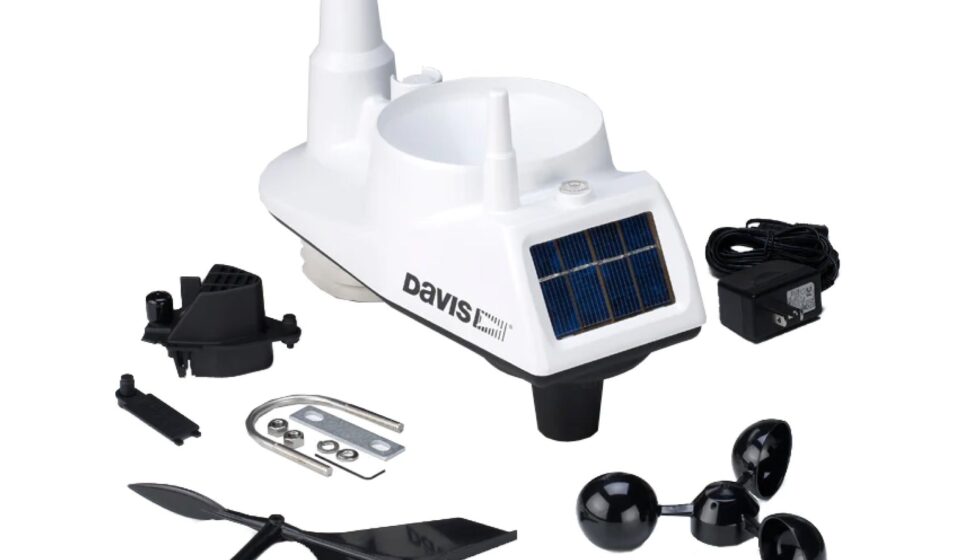
- Most Accurate / Professional Grade: Davis Instruments Vantage Vue
- Best Display Console: AcuRite Iris 5-in-1
- Best Budget Option: Newentor Q3 / Baldr Wireless
Ambient Weather WS-2902C — Best Overall

This is the model that shows up at the top of nearly every comparison, and for good reason. It comes with a 5-in-1 outdoor sensor array (temperature, humidity, wind speed/direction, rainfall), built-in Wi-Fi, native Weather Underground upload, and support for Alexa and Google Home. Setup is straightforward, and the included color console makes it easy to read data at a glance without opening an app.
Best for: homeowners who want accurate data plus smart home integration without a steep learning curve.
Davis Instruments Vantage Vue — Most Accurate
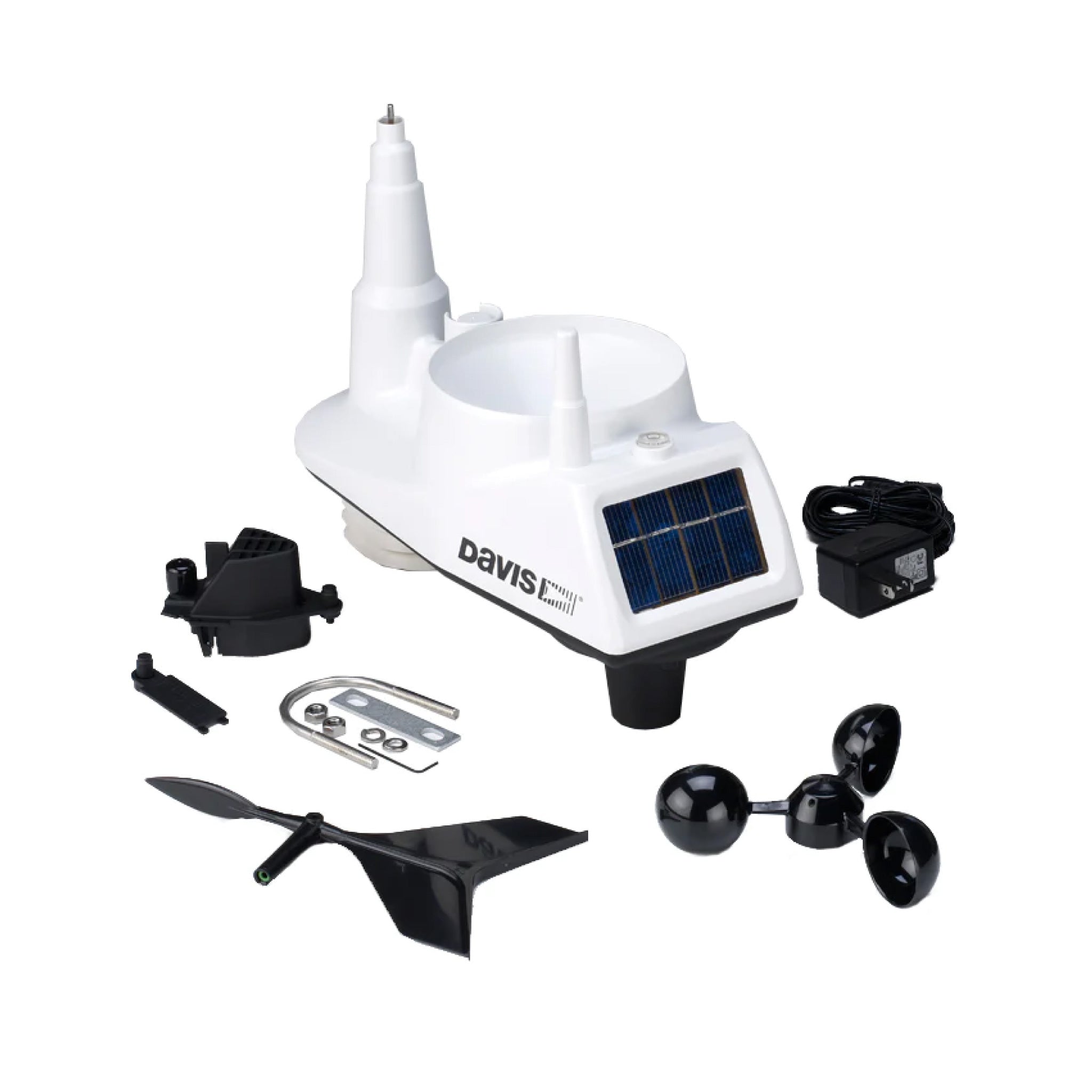
If accuracy is your top priority, this is the one testers consistently point to. It’s built to last over a decade and holds up well in high-wind conditions. It requires a separate console (WeatherLink) for full smart features, which adds to the cost, but the sensor accuracy is considered close to professional-grade.
Best for: serious hobbyists, gardeners tracking rainfall for irrigation, or anyone who wants the most reliable long-term data.
AcuRite Iris 5-in-1 — Best Display Console
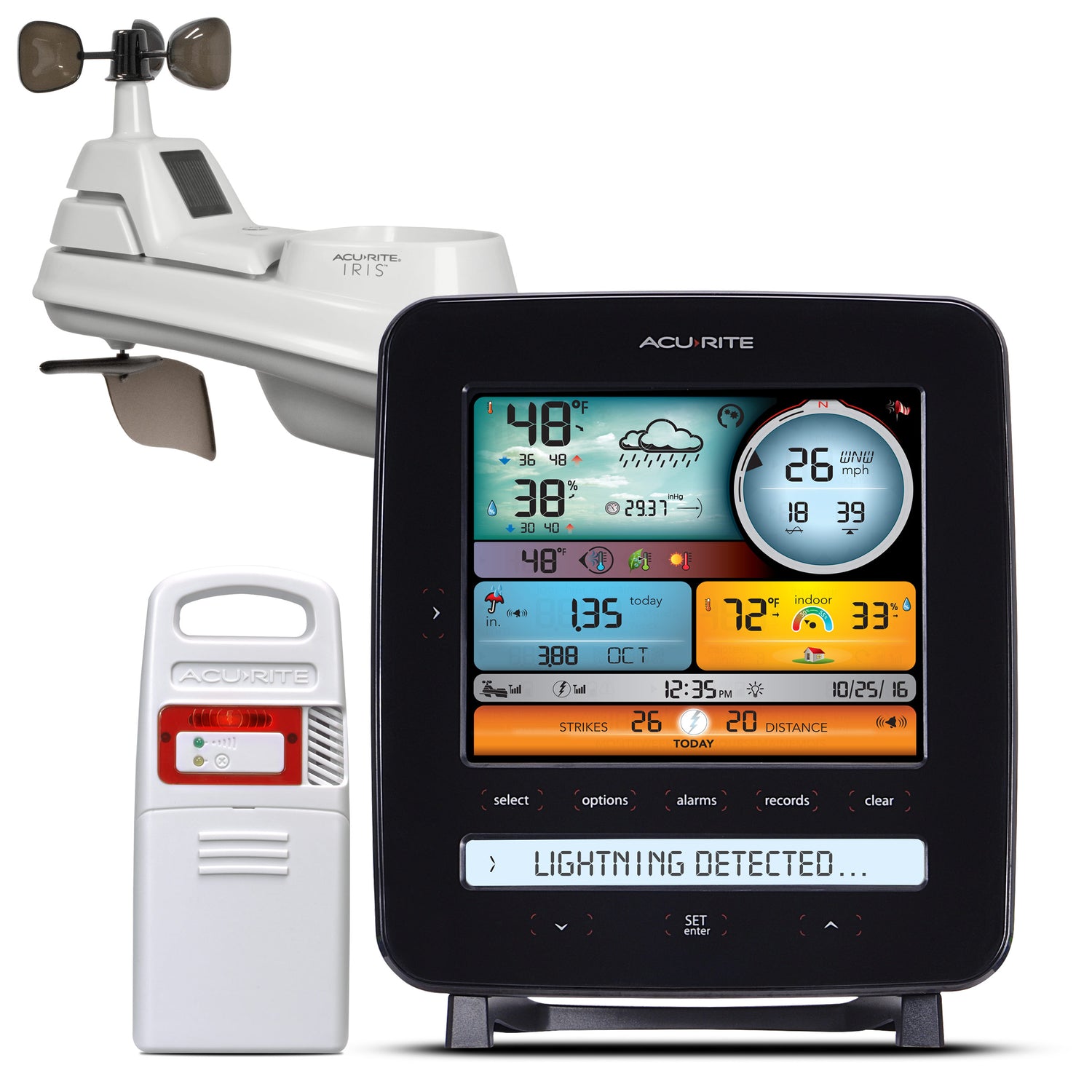
The Iris pairs a comprehensive 5-in-1 sensor with a high-definition color display, making it a strong pick for anyone who wants to check conditions without pulling out their phone. Some versions include lightning detection as well. Note that it typically needs a stack of AA batteries for backup power, which is reliable but adds an ongoing cost.
Best for: buyers who want a dedicated indoor display rather than relying on an app.
Newentor Q3 / Baldr Wireless — Best Budget Pick
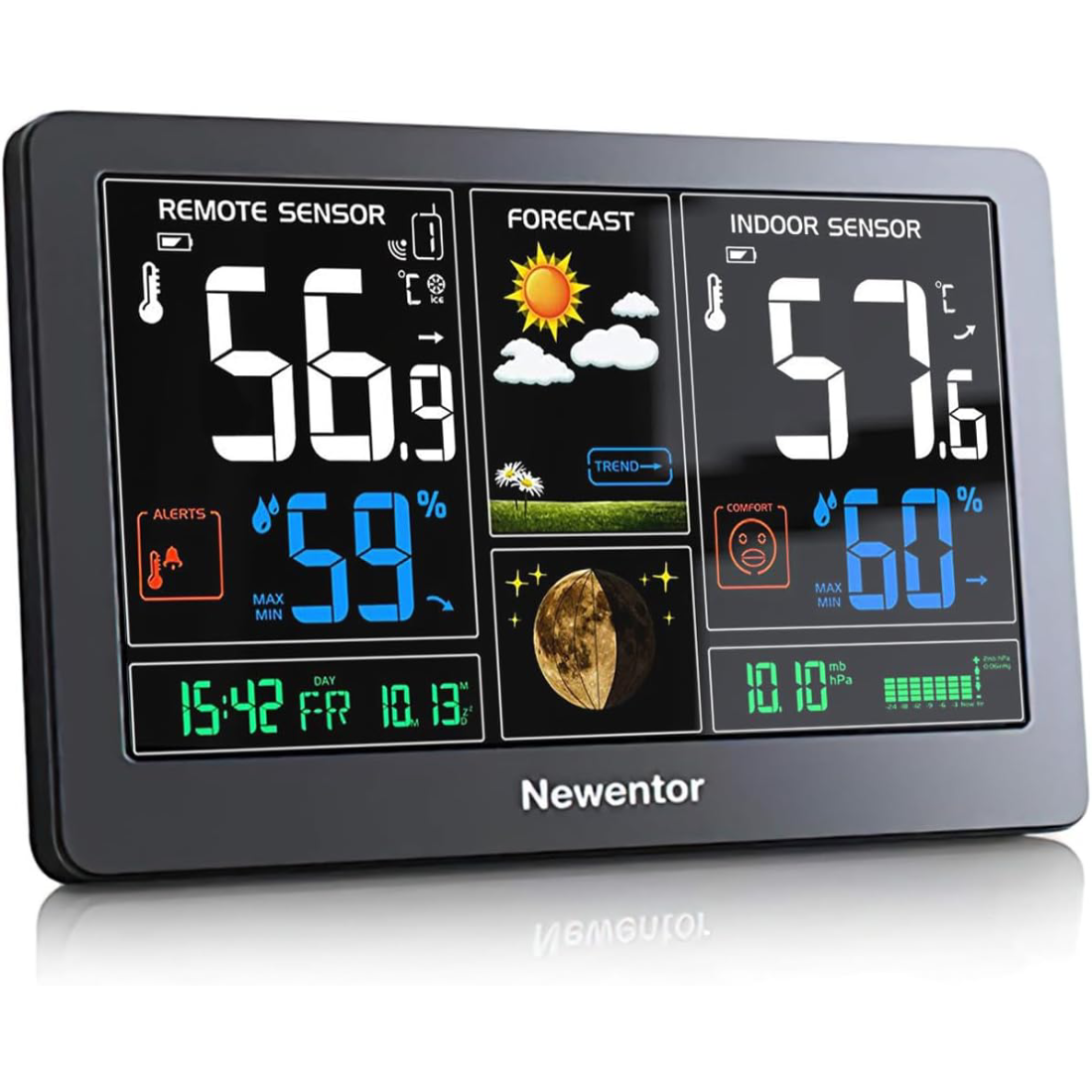
If you just want the basics — indoor/outdoor temperature and humidity, maybe wind and rain — without paying for smart home integration, these budget-friendly options cover the essentials. They won’t upload to Weather Underground or connect to Wi-Fi, but for casual users who just want a readable console, they get the job done.
Best for: first-time buyers or anyone who wants core weather data without the smart-home price tag.
What to Look for Before You Buy
Wi-Fi and smart home support. If you want to check readings remotely, upload to Weather Underground, or connect to Alexa/Google Home, make sure the model has built-in Wi-Fi (or a hub that provides it). Budget models often skip this.
Sensor range. Match the wireless range to your property size. A station rated for 300 feet may struggle if your sensor array sits far from the house.
Battery backup. Power outages happen during storms — exactly when you want data most. Check whether backup power uses replaceable AA/AAA batteries or a more expensive lithium option, since this affects long-term cost.
Display vs. app-only. Some people prefer a physical console on the kitchen counter; others are fine checking an app. This is mostly a personal preference, but it does affect price and setup.
Sensor placement. Even the most accurate station will give bad readings if it’s mounted too close to a heat source (like a roof or wall) or too low to the ground. Proper siting matters more than the specs on the box.
Final Thoughts
For most households, the Ambient Weather WS-2902C hits the best balance of accuracy, features, and price. If storm tracking and low maintenance matter more to you, the WeatherFlow Tempest is worth the extra cost. And if you’re just curious about your backyard microclimate without committing to a full smart-home setup, a budget model like the Newentor Q3 is a reasonable place to start.
As an Amazon Associate, this site earns from qualifying purchases.